What the state and the towns put on paper
Before a roofer starts work: what to check and what to ask
Contractor registration, written contracts and the paperwork for roof jobs in New Jersey, set out with sources, plus the office to call in each of the four towns. The sources sit under each section. Rules change, and the town office has the final word.
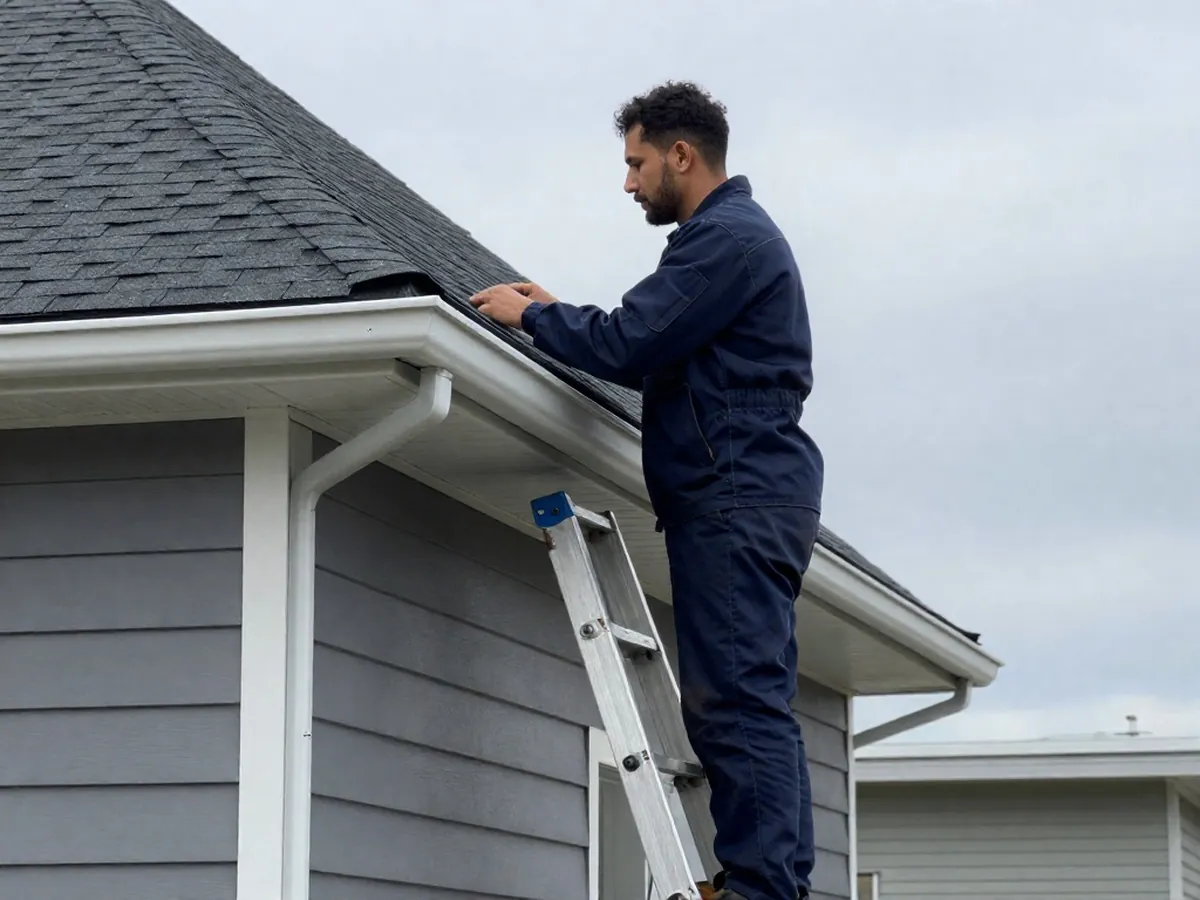
What is covered
- What a registration number does not prove
- Checking liability coverage before anyone climbs up
- What the written contract has to list
- How much to hand over before the work starts
- Roof jobs on the state's maintenance list
- Twins, townhouses and row houses
- Four offices, four sets of hours
- The 2024 codes and a date in February 2027
- Solar panels sitting on the old roof
- After a storm: the insurer and the contractor
- Cancelling within three days, and where that ends
What a registration number does not prove
New Jersey's Division of Consumer Affairs states plainly that registration is not a license. A home improvement contractor registers each year, and the registration number belongs in ads, on vehicles and on business documents. Subcontractors and contractors from other states register too.
The Division's FAQ does not name roofers, so a question to the Division settles whether a particular roofer is covered. The state's regulations say a business needs the registration to be in the home improvement business or to advertise as a contractor. The regulation's definition of home improvement names no roofs or gutters, though its closing words sweep in other changes, repairs and improvements. The License Verification System has a business search that includes home improvement contractors. It is for verification only.
Checking liability coverage before anyone climbs up
The Division's FAQ sets a minimum of $500,000 per occurrence in liability insurance for registered contractors. A 2012 news release from the Division suggests asking for a copy of the liability policy and calling the insurer to check it. The same release gives 800-242-5846 for checking a contractor's registration and complaint history.
What the written contract has to list
State rules ask for a written contract once home improvement work passes $500. The document lists who is selling, what work will be done with the main materials, the full price, when work begins and ends, any security interest, and whatever promises the seller puts in writing. Work cannot start until required permits are issued. Copies of inspection certificates go to the owner, and any change to the deal is written down.
How much to hand over before the work starts
The Division's rule of thumb is thirds: one third before work starts, one third at the halfway point and the last third once the job is done. It is a suggestion, not a legal limit. In its Sandy-era advice, the asphalt roofing trade group cautioned homeowners about contractors asking for money up front. A written payment schedule puts both ideas on paper.
Roof jobs on the state's maintenance list
New Jersey's code lists some work as ordinary maintenance, which skips the permit process. On detached one- and two-family homes that includes repairing or replacing existing roof covering, repairing or replacing gutters and leaders, and liquid lining of a chimney. The list has limits for work that touches loadbearing parts, structural beams or fire safety.
Under a 2018 alert from the Department of Community Affairs, replacing any share of a detached one- or two-family home's existing roof covering, all of it included, counts as ordinary maintenance. The alert adds that ordinary maintenance is no waiver from code compliance, and that it took effect on March 5, 2018.
Twins, townhouses and row houses
The 2018 alert does not address attached dwellings. A row house, a twin or a townhouse falls outside what it says, so the town office is the one to ask. None of the town pages read for these facts addresses it.
Two details from the town pages: Harrison's FAQ says documents are signed and sealed by contractors holding a state license, except for owner-occupied one-family houses, and Newark's 2026 checklist lists a home improvement contractor license among its requirements.
Four offices, four sets of hours
Each town runs its own office, and none of the four town pages read for these facts mentions roofing by name. The table at the end lists address, phone and hours as each town's page shows them. Numbers and hours change, so a call before a visit saves a trip.
The 2024 codes and a date in February 2027
New Jersey's Department of Community Affairs shows the 2024 editions of the building codes as adopted on August 17, 2026. The Fall 2026 Construction Code Communicator gives applicants a six-month grace period and names February 17, 2027 as the final day for filing under the earlier codes. It also notes that the 2024 codes adopt newer snow-load standards, which may be higher in some areas. The pages checked do not say how the new editions affect the ordinary-maintenance list, so the town office has the current answer.
Solar panels sitting on the old roof
The Spring 2025 Communicator says reroofing on detached one- or two-family homes is ordinary maintenance, and that a roof replacement with existing panels left in place needs no building permit. If the panel rails are removed and grounding is compromised, an electrical permit is needed. A roof with panels is worth a conversation with the roofer and the town office before work starts.
After a storm: the insurer and the contractor
After wind or water damage, New Jersey's insurance department tells policyholders to call the insurer promptly, make temporary repairs, save the receipts and take pictures before discarding anything. Choosing a contractor stays with the homeowner, and the insurer's suggestion is optional. The department also runs a consumer hotline at 1-800-446-7467. A written proposal, the asphalt roofing trade group adds, is worth asking for.
Cancelling within three days, and where that ends
The FTC's cooling-off rule lets a buyer cancel certain sales made away from the seller's regular place of business for three days, until midnight of the third business day. Exceptions include emergency purchases, a visit the buyer asked for to handle a repair or maintenance (anything beyond what was requested is covered), and sales at the seller's permanent place of business.
The office to call in each town
| Town | Office | Address | Phone and hours | What the town's page says about roofing |
|---|---|---|---|---|
| Harrison | Construction & Engineering | 401 Warren Street, 2nd Floor, Harrison, NJ 07029 | 973-268-2446; open weekdays 8:00 until 4:30 | Lists no roofing rules, contractor requirements or fees. Applications and inspection requests go through the SDL portal. |
| Kearny | Construction Code Enforcement | Town Hall Annex, 410 Kearny Avenue | (201) 955-7880; weekdays, 8:00 am until 4:00 pm | Lists a $25.00 zoning permit and $20.00 per $1,000 of work for a construction permit, $50.00 minimum. No roofing rules. |
| East Newark | Building & Construction | 34 Sherman Avenue, East Newark, NJ 07029 | (973) 481-2902, extension 221; weekdays, 8:00 AM until 5:00 PM | Says permits are issued under the New Jersey Uniform Construction Code. No roofing, contractor or fee details. |
| Newark | Building Division and Office of Uniform Construction Code | 920 Mayor Kenneth A. Gibson Boulevard, Room B23, Newark, NJ 07102 | 973-733-3957 or 973-733-5132; payments on weekdays, 8:30 AM until 4:15 PM | Names no roofing rule. A 2026 checklist lists a home improvement contractor license among its requirements. |
Still unsure about a point here?
Dial (862) 418-5296 and go over the roof, the town and the items you want written down. The town office still has the last word on its own rules.
Call (862) 418-5296