Almost-level roofs and the water that stays on them
Flat and low-slope roofs in Harrison, NJ
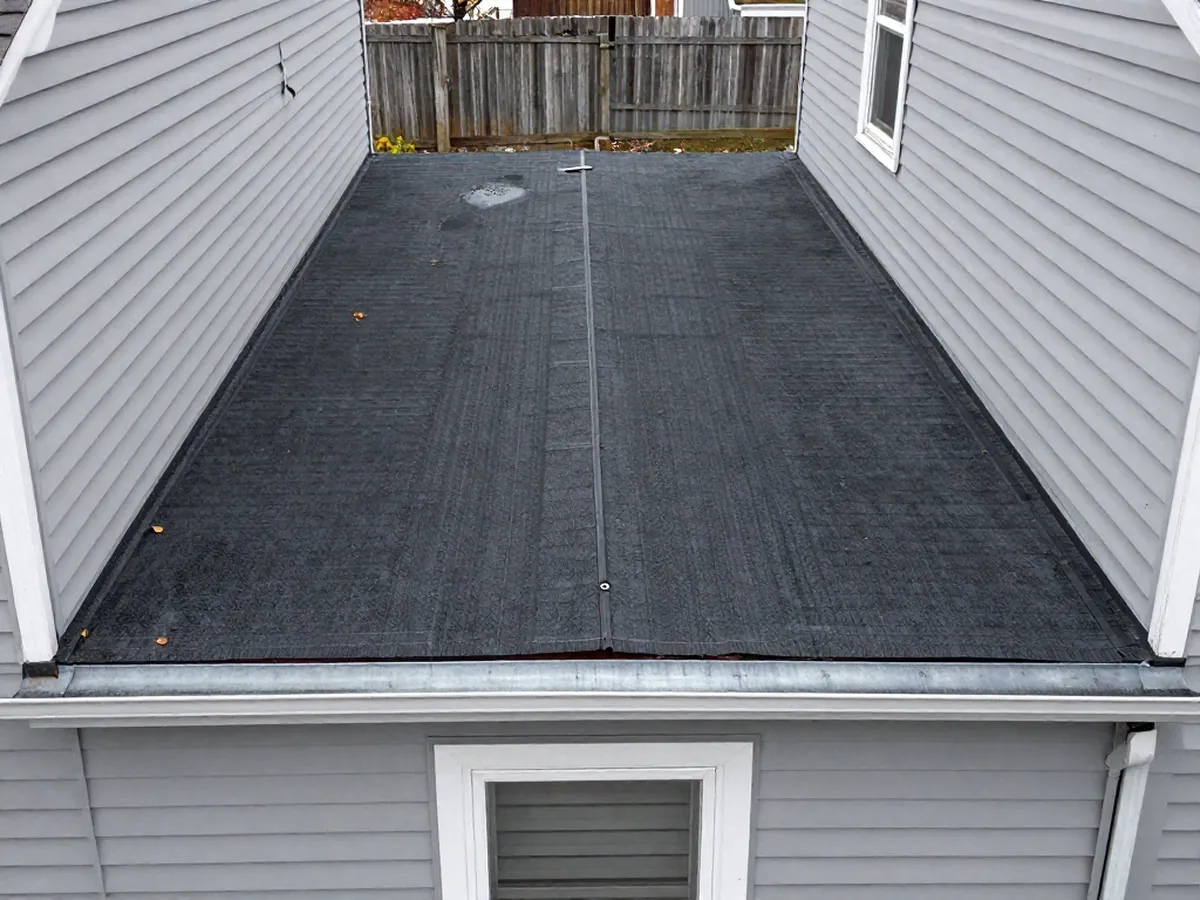
A flat roof over a Harrison rear addition, porch or bay gives rain few places to go. Your move: call (862) 418-5296 and say where water stands and how long it lingers after a storm.
Back away and get help if
- Do not walk out onto a flat roof to look around. A wet membrane is slick and the edge is easy to miss, so use a window.
- A ceiling bulging under a flat roof: clear everyone out from beneath it and dial 911. Standing water is heavy.
- Water leaking near a ceiling light or a wall socket: move away from the wet area and dial 911 from the dry side of the house.
- A wire sagging or lying near the addition: stay back and dial 911.
Membranes, seams and the slope that matters
The National Park Service's roofing overview lists the common low-slope coverings: built-up roofing, single-ply sheets such as EPDM, PVC and TPO, modified bitumen, and sprayed polyurethane foam. Single-ply membranes run about 30 to 80 mils thick.
Slope is the quiet variable. The asphalt roofing trade group puts the minimum at a quarter inch of drop per foot of run, and below that water lingers. Seams, drains and the flashing at walls are where to look first.
Around Harrison and next door
Most of Harrison is served by combined sewers, where storm water and household sewage share one pipe, according to the town's 2020 master plan. It lists six active overflow points to the Passaic River and flags drainage-capacity trouble near Angelo Cifelli Drive and Bergen Street. Where a roof drain empties is worth knowing before a storm.
Newark's housing leans toward small multi-family buildings. About 49,300 of its 121,546 homes sit in buildings of two to four units, against 15,303 detached houses. One roof, several households.
Heat, ice and ponding
July averages 78.2 degrees at Newark Airport, topping out near 86.9. Under that sun, the Department of Energy says, a reflective roof can sit more than 50 degrees cooler than a dark one, although cool roofs pay a winter heating penalty.
In winter, the asphalt roofing trade group warns that ice can scrub a membrane. September's record month at the airport brought 10.5 inches of rain in 2021, the sort of month that tests a drain.
What to look at with feet on the ground
Everything here can be done from the ground or through a window. A job that needs a ladder belongs to the roofer.
- A day or two after rain, look down from an upstairs window. Puddles still sitting there are worth a photo; the asphalt roofing trade group counts water that lingers past 48 hours as ponding.
- Look at the drain or the opening at the roof edge. Leaves, grit or a clogged mouth keep water from leaving.
- Check the ceiling under the roof for stains. A line of them can trace a seam, and a stain by a wall can point to the edge.
- Photograph bubbles, wrinkles or lifted strips along the seams from a window, with the date. Take the photo again after the next storm.
Row houses and the paperwork gap
The state's 2018 alert covers one- and two-family detached houses only. An attached house with a flat roof falls outside what it addresses, so the town office is the call to make before work begins.
The four offices are listed on checking a contractor.
Ready to describe the roof?
Ready for the call: the street address, where the damage shows and a guess at the roof's age. Dial (862) 418-5296. Renters: the dated photo goes to your landlord or property manager at the outset. Covered: Harrison, Kearny, East Newark and Newark.
Call (862) 418-5296