Wind, branches and heavy rain on the roof
Storm damage to a Harrison roof
After a hard wind or a night of heavy rain, Harrison roofs show it in shingles on the sidewalk, bent gutters and wet ceilings. Next step: call (862) 418-5296 and describe what you found, with photos of anything you can safely take from the ground.
Back away and get help if
- A wire on the ground or hanging in a branch near the house: assume current is flowing, stay far back and dial 911. If PSE&G supplies your power, its number is 1-800-436-7734.
- Water seeping through a ceiling fixture or next to an outlet: leave the room and dial 911 from another part of the house, away from the wet.
- A ceiling that sags after the storm: do not stand under it. Clear the room and dial 911.
- Debris or a branch lying on the roof: do not climb up to haul it off. Ladders belong at least ten feet away from overhead wires, and wet shingles are no place for boots.
Where wind and rain get in first
Edges and joints go first. Wind lifts the lowest shingles at the eaves, and rain finds the metal flashing around chimneys, walls and vents. After a storm, the asphalt roofing trade group says, flashings are the roof's most vulnerable points.
FEMA's shingle fact sheet notes that tabs need to be sealed down. From the ground the signs are easy to spot: a raised edge, a dark patch, a streak below a chimney.
Around Harrison and next door
Isaias came through on 4 August 2020. By the New Jersey Weather and Climate Network's count, over a million of the state's utility customers lost electricity, a few for five days, and the winds were the strongest statewide since Sandy in 2012. The network's account notes a fatality involving a live wire while crews and residents cleaned up.
Newark Airport took 8.44 inches from Ida's remnants during the first two days of September 2021. The heaviest hour alone gave 3.65 inches, a rate the network puts at once in a thousand years.
Wind in August, rain in September
Storm trouble is not a winter-only story. Isaias came in August and Ida arrived in early September. Newark Airport's September normal is 3.82 inches of precipitation, yet its record month reached 10.5 inches in 2021. A normal month and a bad one can sit a long way apart.
The airport is the station behind these figures, so a given street in Harrison, Kearny, East Newark or Newark can see something different.
What to look at with feet on the ground
Everything here can be done from the ground or through a window. A job that needs a ladder belongs to the roofer.
- Photograph before cleanup: shingles on the lawn, a split branch, a bent gutter. The state insurance department tells policyholders to take photos first, ahead of tossing any damaged material.
- Scan the roof from the ground or from an upstairs window for dark patches where shingles went missing, lifted edges and shingles hanging by a corner. The roofing trade group's Sandy guidance begins with the ground and the windows, not the roof.
- Look at the ceilings and the attic side of the roof for new stains, drips and damp insulation. Water near a chimney or a wall is a clue to the flashing.
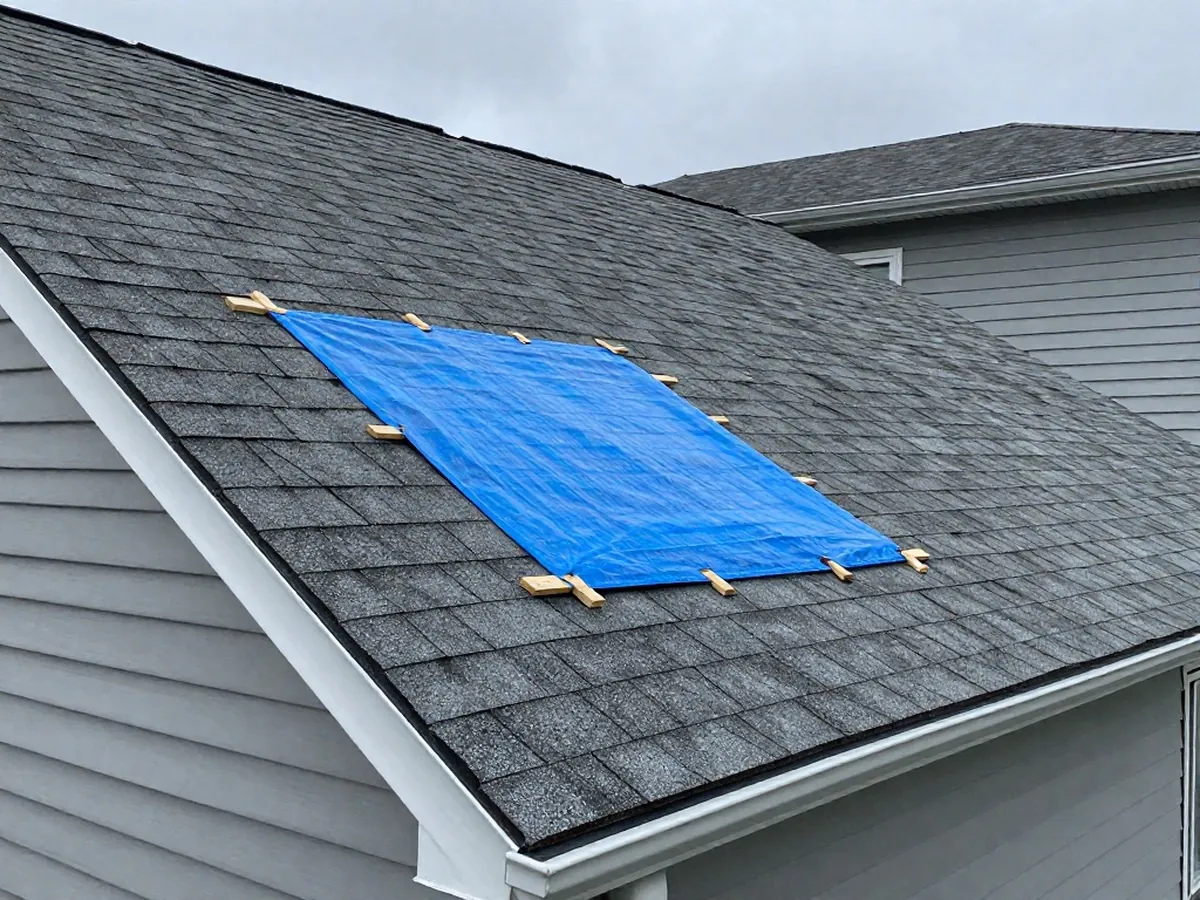
- Keep every receipt for anything done to limit further damage, such as a tarp put on by a roofer. The state insurance department says to make temporary repairs and keep the receipts.
Insurance, and who does the work
Under New Jersey's insurance department guidance, policyholders pick their own contractor, whatever the insurer suggests. The department also advises calling the insurer promptly and saving receipts for temporary repairs.
How to read an estimate, and which payment schedules the state suggests, is covered in checking a contractor.
Ready to describe the roof?
Ready for the call: the street address, where the damage shows and a guess at the roof's age. Dial (862) 418-5296. Renters: the dated photo goes to your landlord or property manager at the outset. Covered: Harrison, Kearny, East Newark and Newark.
Call (862) 418-5296